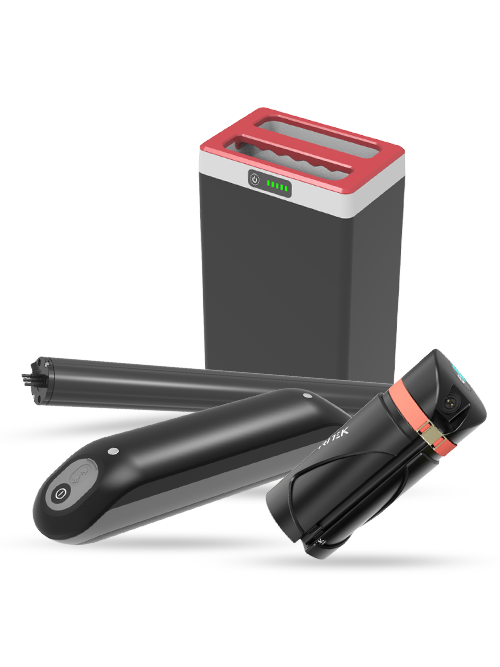
Battery overcharge and undercharge are two of the most common causes of premature battery failure. Whether used in e-bikes, electric motorcycles, golf carts, AGVs, marine applications, or energy storage systems, improper charging can shorten battery life, reduce performance, increase operating costs, and even create safety hazards.
Battery overcharge occurs when a battery is charged beyond its recommended voltage, while undercharge occurs when it is repeatedly left below its optimal state of charge. Both conditions accelerate battery degradation, reduce capacity, and can compromise safety. Using an intelligent Battery Management System (BMS) and proper charging practices is the most effective way to prevent these problems.
Understanding why overcharge and undercharge happen, and how to prevent them is essential for battery manufacturers, OEMs, fleet operators, and equipment integrators seeking reliable and long-lasting power solutions.
What Is Battery Overcharge?
Battery overcharge refers to charging a battery after it has already reached its maximum safe voltage.
Every battery chemistry has a designed charging limit. Once this limit is exceeded, excess electrical energy is converted into heat and unwanted chemical reactions instead of stored energy.
For lithium-ion batteries, overcharging can permanently damage the electrode materials and electrolyte. In severe cases, excessive heat buildup may lead to thermal runaway.
For lead-acid batteries, overcharging causes excessive water loss, plate corrosion, and gas generation, significantly shortening service life.
Common Signs of Battery Overcharge
- Battery becomes unusually hot during charging
- Battery swelling or deformation
- Reduced runtime after charging
- Rapid capacity degradation
- Increased internal resistance
- Unusual odor or electrolyte leakage
- Frequent BMS protection activation
Ignoring these warning signs can lead to irreversible battery damage.
What Is Battery Undercharge?
Battery undercharge occurs when a battery is consistently not charged to its recommended full state of charge or is stored for extended periods at a low charge level.
Unlike overcharging, undercharging may appear harmless initially, but repeated partial charging can gradually reduce usable capacity and increase internal degradation.
For lead-acid batteries, chronic undercharging causes sulfation, where lead sulfate crystals harden on the plates, making the battery difficult or impossible to recharge fully.
For lithium batteries, prolonged low voltage may trigger deep discharge protection and permanently reduce available capacity.
Common Signs of Battery Undercharge
- Shorter operating time
- Lower power output
- Slow charging recovery
- Unexpected shutdowns
- Voltage drops under load
- Capacity loss over time
Many battery failures attributed to “aging” are actually caused by long-term undercharging.
Battery Overcharge vs Undercharge
Factor | Overcharge | Undercharge |
|---|---|---|
Definition | Charging beyond maximum voltage | Charging below recommended level repeatedly |
Primary Cause | Faulty charger or BMS | Incomplete charging or long storage |
Main Risk | Heat generation and safety hazards | Capacity loss and performance decline |
Battery Life Impact | Accelerated degradation | Accelerated degradation |
Safety Risk | High | Moderate |
Recoverability | Usually irreversible | Sometimes recoverable if detected early |
Prevention | Intelligent BMS and proper charger | Regular full charging and battery maintenance |
Although different in mechanism, both conditions significantly shorten battery lifespan and increase total ownership costs.
What Causes Battery Overcharge?
1. Faulty Battery Chargers
A charger that continues supplying current after the battery reaches full capacity is one of the leading causes of overcharging.
Using incompatible chargers with incorrect voltage settings increases this risk significantly.
2. Battery Management System Failure
Modern lithium batteries rely on a Battery Management System (BMS) to monitor voltage, current, and temperature.
If the BMS malfunctions or lacks proper protection algorithms, overcharging may occur.
High-quality intelligent BMS solutions automatically disconnect charging once safe voltage thresholds are reached.
3. Incorrect Charging Parameters
Charging with excessive voltage or current stresses battery cells and generates excessive heat.
Industrial battery systems require charging profiles specifically matched to their chemistry and configuration.
4. High Ambient Temperature
Heat accelerates chemical reactions inside batteries.
Charging batteries in high-temperature environments increases the likelihood of overcharge damage and reduces cycle life.
5. Poor System Integration
In multi-battery systems or battery swapping applications, mismatched batteries or poorly designed charging infrastructure can create voltage imbalances that lead to localized overcharging.
What Causes Battery Undercharge?
1. Frequent Partial Charging
Many users repeatedly charge batteries for short periods without completing a full charging cycle.
Over time, this reduces usable capacity and creates imbalance between cells.
2. Long-Term Storage
Leaving batteries unused for months without maintenance charging allows self-discharge to reduce voltage below recommended levels.
Deeply discharged batteries may become permanently damaged.
Tritek’s batteries feature extremely low power consumption in sleep mode, allowing up to 6 months of charge-free storage at 5% SOC and up to 2.5 years at 20% SOC. This design significantly reduces self-discharge risks and ensures batteries remain ready for use even after extended periods without charging.

3. Low-Quality Chargers
Some chargers terminate charging too early or fail to provide the correct charging profile.
This leaves batteries consistently below full charge.
4. Heavy Loads
Applications with continuous high-power demand may discharge batteries faster than expected.
If recharge cycles are insufficient, batteries remain chronically undercharged.
5. Cell Imbalance
Without active balancing, weaker cells reach low voltage before stronger cells, limiting overall battery capacity and increasing undercharge effects.
Risks of Battery Overcharge and Undercharge
Reduced Battery Lifespan
Every overcharge or undercharge cycle accelerates chemical degradation.
A battery designed for thousands of cycles may lose a significant portion of its lifespan if charging is not properly managed.
Capacity Loss
Improper charging permanently reduces the amount of energy a battery can store.
As capacity declines, runtime becomes shorter and charging frequency increases.
Higher Operating Costs
Premature battery replacement increases maintenance expenses and equipment downtime.
For commercial fleets and industrial operations, battery failures directly impact productivity.
Safety Hazards
Overcharged batteries generate excessive heat.
In extreme cases, damaged lithium cells may experience thermal runaway, potentially resulting in fire or explosion.
Although undercharging is generally less hazardous, deep discharge can destabilize battery chemistry and compromise long-term safety.
Unstable Equipment Performance
Voltage fluctuations caused by degraded batteries can lead to unexpected shutdowns, reduced motor performance, and inconsistent system operation.
For electric vehicles and industrial equipment, this directly affects operational reliability.
How to Prevent Battery Overcharge
Use an Intelligent Battery Management System (BMS)
An advanced BMS continuously monitors:
- Cell voltage
- Charge current
- Temperature
- State of charge (SOC)
- Cell balancing
When abnormal conditions occur, the BMS automatically limits or disconnects charging to protect the battery.
This is the most effective defense against overcharging.
Use the Correct Charger
Always use chargers designed specifically for the battery chemistry and voltage.
OEM-approved chargers ensure charging profiles remain within safe operating limits.
Monitor Battery Temperature
Avoid charging batteries under extremely hot conditions.
Many intelligent battery systems automatically reduce charging current when temperatures rise beyond safe limits.
Enable Remote Monitoring
Cloud-connected battery systems can provide:
- Real-time battery health
- Charging status
- Fault alerts
- Predictive maintenance notifications
These features help fleet operators identify charging issues before failures occur.
How to Prevent Battery Undercharge
Complete Charging Cycles Regularly
Allow batteries to reach full charge according to manufacturer recommendations rather than relying exclusively on short top-up charging.
Avoid Long-Term Low-Charge Storage
If batteries will remain unused for extended periods, store them at the recommended state of charge and perform periodic maintenance charging.
Balance Battery Cells
Cell balancing ensures all cells remain at similar voltage levels, maximizing capacity and preventing weak-cell limitations.
Schedule Preventive Maintenance
Routine inspection of chargers, connectors, cables, and battery management systems helps detect undercharging issues before they affect performance.
Choose Intelligent Battery Solutions
Modern lithium battery packs integrate charging management, protection algorithms, diagnostics, and communication capabilities to optimize charging automatically.
For OEMs and fleet operators, intelligent battery systems reduce maintenance costs while improving safety and reliability.
Why Intelligent BMS Technology Matters
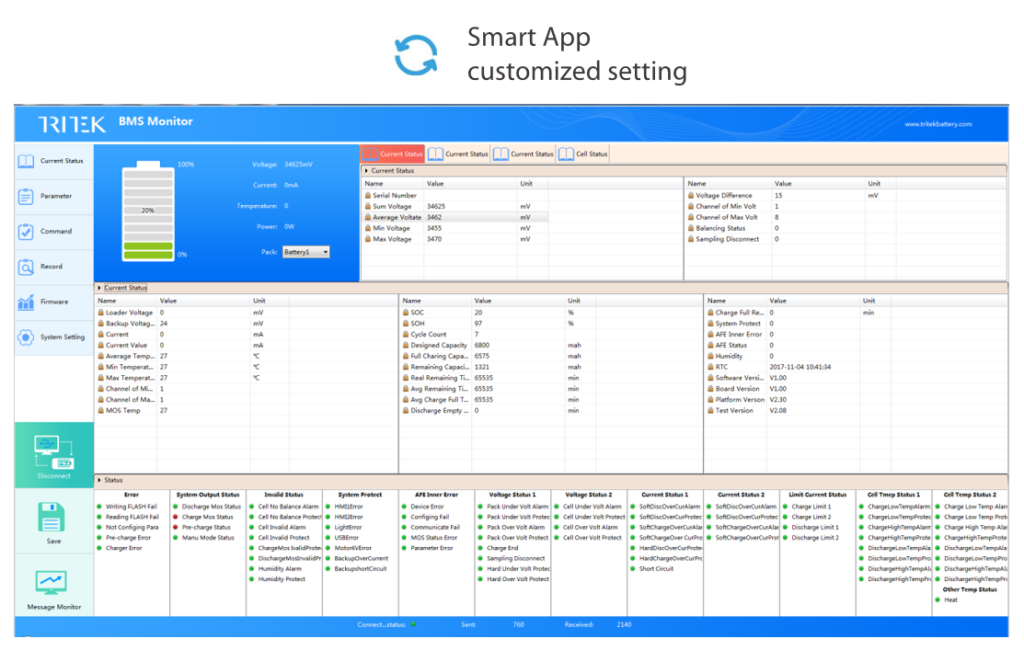
As battery systems become more sophisticated, charging protection is no longer optional.
An intelligent BMS can provide:
- Overcharge protection
- Overdischarge protection
- Overcurrent protection
- Short-circuit protection
- Temperature protection
- Cell balancing
- State of charge estimation
- Fault diagnostics
- Remote monitoring
- OTA firmware updates
These capabilities extend battery life while improving safety and operational efficiency.
For commercial applications such as e-bikes, electric motorcycles, golf carts, AGVs, marine vessels, and industrial equipment, intelligent battery management has become a key differentiator.
Battery solution providers such as Tritek integrate advanced BMS technology with customized lithium battery packs to provide comprehensive protection against both overcharge and undercharge, helping OEM customers improve product reliability and reduce lifetime operating costs.
Frequently Asked Questions
Is overcharging worse than undercharging?
Generally, yes. Overcharging creates greater safety risks because it generates excessive heat and can trigger thermal runaway in lithium batteries. However, long-term undercharging also significantly shortens battery life and reduces capacity.
Can an overcharged battery be repaired?
In most cases, permanent damage has already occurred. Minor overcharge events may only reduce battery lifespan, while severe overcharging often requires battery replacement.
Can undercharged batteries recover?
If detected early, some undercharged batteries can regain performance after proper charging. However, prolonged deep discharge may cause irreversible damage.
Does a BMS completely prevent overcharge?
A properly designed intelligent BMS greatly reduces the risk by monitoring voltage, current, and temperature while automatically stopping charging when limits are reached. It is one of the most effective battery protection technologies available.