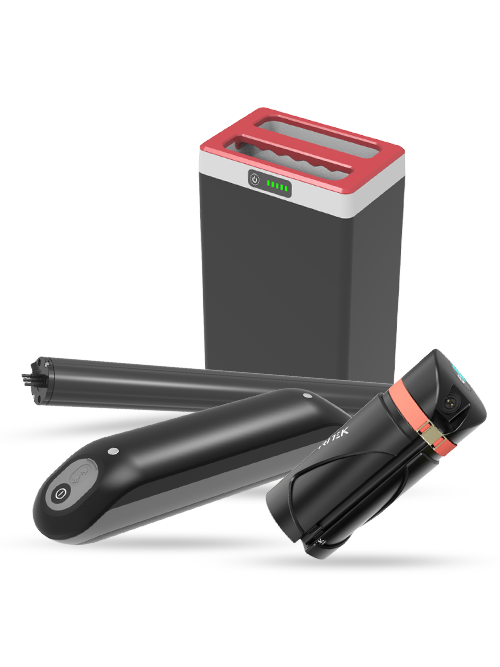
Choosing the best golf cart battery comes down to more than price. The right battery affects how far your cart goes, how much power it delivers, how often you maintain it, and how much you spend over time.
The best golf cart battery depends on your usage, budget, and performance requirements. Lithium batteries offer longer lifespan, lighter weight, and faster charging, while lead-acid batteries are more cost-effective upfront. Key factors to consider include voltage compatibility, capacity (Ah), cycle life, charging efficiency, weight, space constraints, safety certifications, and smart features like battery monitoring.
Selecting the right battery isn’t just about price or brand. It requires understanding your golf cart’s technical specifications, the type of operations, and long-term maintenance requirements. Let’s break it down step by step.
What Is a Golf Cart Battery and How Does It Work?
Golf cart batteries are deep-cycle batteries designed to provide consistent power over long periods. Unlike starter batteries in cars, deep-cycle batteries are engineered to deliver steady current and endure repeated charging cycles.
Golf carts commonly use 36V, 48V, or 72V systems, depending on motor configuration and application. Understanding your system’s voltage is critical for battery selection.
Types of Golf Cart Batteries (Pros & Cons)
Lead-Acid Batteries (Flooded, AGM, Gel)
- Pros: Low upfront cost, widely available, proven technology
- Cons: Heavier, limited cycle life (~300–800 cycles), frequent maintenance (water topping for flooded types)
- Best for: Occasional use, budget-conscious fleets
Lithium-Ion Batteries (LiFePO4)
- Pros: Long lifespan (2000–5000 cycles), lightweight, compact, fast charging, maintenance-free
- Cons: Higher upfront cost
- Best for: Commercial fleets, high-frequency use, long-range applications
Comparison Table
Feature | Lead-Acid | Lithium-Ion (LiFePO4) |
|---|---|---|
Weight | Heavy | Light |
Cycle Life | 300–800 | 2000–5000+ |
Charging Time | 8–12 hours | 2–4 hours |
Maintenance | High | Low |
Cost Over Lifetime | Moderate | Lower (ROI friendly) |
Key Factors to Consider When Choosing the Best Golf Cart Battery
Fleet Usage Patterns and Duty Cycle
Assess daily operating hours, terrain (hills vs flat), passenger/load requirements, and rental vs staff usage. High-cycle fleets (multiple rounds or shifts per day) benefit most from lithium’s deep-discharge tolerance and fast recovery.
Total Cost of Ownership (TCO) Analysis
Upfront price is only one factor. A realistic TCO calculation should include:
- Acquisition cost
- Replacement frequency
- Maintenance & labor
- Energy/charging costs
- Downtime/revenue loss
- Disposal/recycling
Many fleet operators recover the premium for lithium within 18–36 months through reduced labor, fewer replacements, and higher utilization. Over 10 years, lithium frequently shows 30–60% lower TCO in moderate-to-high usage scenarios.
Uptime and Fleet Utilization
Faster charging (2–4 hours vs 8–12) allows more carts to return to service quickly. This can improve fleet availability by 20–40% and, in some cases, reduce the total fleet size required.
Scalability and Standardization
Standardizing on one battery type/brand across the fleet simplifies inventory, training, and servicing while strengthening negotiating power for volume discounts.
Voltage, Capacity, and Compatibility
Most commercial carts run on 48V systems. Match capacity (Ah) to daily range needs (e.g., 100–105Ah for standard use; 150Ah+ for heavy-duty or hilly terrain). Verify compatibility with existing controllers and chargers, lithium upgrades often require a dedicated lithium charger.
Maintenance and Labor Costs
Lead-acid batteries require regular watering, cleaning, equalization, and ventilation. In a 50-cart fleet, this can consume hundreds of labor hours annually. Lithium is virtually maintenance-free with integrated Battery Management Systems (BMS).
Safety, Reliability, and ESG Considerations
Quality lithium packs include robust BMS for protection against over-discharge, overheating, and short circuits. LiFePO4 chemistry is thermally stable and more recyclable than lead-acid, supporting corporate sustainability goals.
Warranty, Support, and Bulk Purchasing
Look for commercial-grade warranties (often 5–10 years on lithium) and suppliers with proven fleet references, installation support, and regional service networks. Volume pricing and leasing/financing options can improve cash flow.
Operating Environment
Hot climates (common in Sun Belt golf regions) accelerate lead-acid degradation. Lithium generally offers better temperature tolerance when equipped with proper BMS.
How to Evaluate a Reliable Golf Cart Battery Supplier
A strong supplier should offer:
- In-house BMS design and battery engineering
- Proven track record with UL, CE, and UN38.3 certifications
- Customization capability (voltage, Ah, modularity)
- High production capacity and timely delivery
- Comprehensive after-sales support for fleet management
Conclusion
Choosing the best golf cart battery requires balancing performance, lifespan, safety, and cost. Lithium batteries increasingly dominate commercial and high-performance applications due to their longevity, lightweight design, and maintenance-free operation.
Looking for a more reliable golf cart battery solution? Tritek delivers certified lithium battery packs with advanced BMS, flexible customization, and strong production capacity, helping OEMs and fleet operators achieve safer, longer-lasting, and more efficient performance.
FAQ – Golf Cart Battery Selection
Q1: What is the best battery type for golf carts?
A: Lithium batteries offer the best combination of lifespan, weight, and performance, while lead-acid remains cost-effective for occasional use.
Q2: How long do golf cart batteries last?
A: Lead-acid: ~3–5 years; Lithium: 8–12 years, depending on usage and maintenance.
Q3: Is it worth upgrading to lithium?
A: For high-frequency use, fleets, or hilly terrains, yes—lithium reduces downtime and maintenance costs.
Q5: Can I replace lead-acid with lithium directly?
A: Only if the voltage, BMS, and mounting requirements are compatible. Professional assessment recommended.