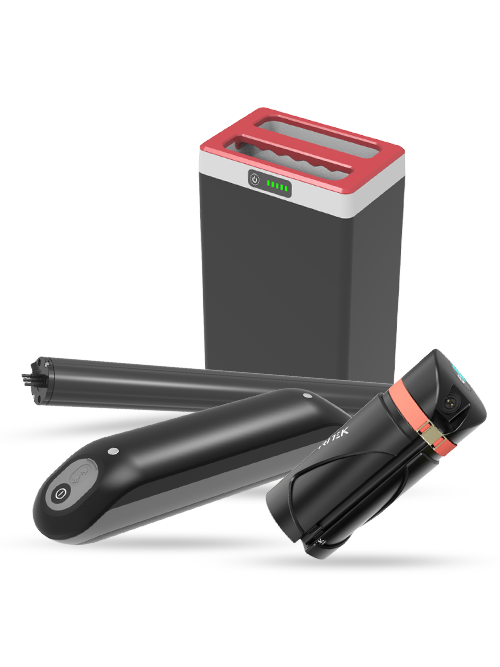
When developing or sourcing modern battery systems, understanding CAN data in lithium batteries has become essential. The Controller Area Network (CAN) bus has been the de-facto communication backbone for lithium-ion battery packs in electric vehicles, energy storage systems, marine applications, and industrial equipment for over 15 years. A modern Battery Management System (BMS) constantly broadcasts dozens of real-time parameters over CAN bus so that chargers, motor controllers, vehicle ECUs, displays, and telemetry systems know exactly what the battery is doing.
CAN data in lithium batteries includes real-time operating information such as SOC, SOH, voltage, current, temperature, power limits, charging status, error flags, protection events, and diagnostic logs. These battery data points allow OEMs to ensure safety, improve efficiency, and achieve seamless coordination between the BMS and the entire vehicle or equipment system.
Although CAN is often seen as just a communication bus, in practice it acts as the “language” between the battery and the rest of the system. Understanding each category of CAN data helps buyers evaluate compatibility, engineering complexity, and long-term reliability, especially for e-bikes, motorcycles, AGVs, robotics, and industrial equipment.
What Is CAN Data in Lithium Batteries?
CAN data in lithium batteries refers to structured messages sent by the BMS to external devices. These messages include electrical measurements, safety indicators, and system control signals. Because CAN offers high noise immunity and real-time communication, it is widely used across e-mobility and industrial applications.
Typical CAN data categories include:
- Operating data (voltage, current, SOC, SOH)
- Safety and protection status
- Power control commands
- Diagnostic information
Core Operating Data Transmitted via CAN
Voltage-Related Data
- Total pack voltage
- Minimum and maximum cell voltage
- Voltage imbalance status
These values help the controller manage power delivery, detect potential cell imbalance, and prevent overvoltage or undervoltage conditions.
Current-Related Data
- Real-time charge/discharge current
- Peak current readings
- Short-time burst current capability
This ensures the motor controller stays within safe operating limits.
Temperature Data
- Battery cell temperature (multiple sensors)
- MOSFET/PCB temperature
- Ambient temperature
- Redundant thermal sensor data
Temperature is one of the most critical safety indicators in li-ion batteries.
State of Charge (SOC)
- Remaining capacity (%)
- Absolute capacity (Ah)
- Estimated remaining riding/driving range
SOC allows chargers and controllers to apply correct charging profiles and range estimations.
State of Health (SOH)
- Battery degradation level
- Internal resistance trend
- Cycle count
These SOH parameters form the foundation of effective battery health monitoring, enabling predictive maintenance
Safety & Protection Data
Protection Events
The BMS continuously reports protection triggers such as:
- Overvoltage / undervoltage
- Overcurrent (charge/discharge)
- Short circuit
- Overtemperature / undertemperature
- Cell imbalance
These messages enable immediate system shutdown when necessary.
Fault & Error Flags
- Warning level vs. critical level flags
- Error IDs for troubleshooting
- Persistent fault records
Controllers and service teams rely on these data frames for accurate diagnosis.
Power Control & System-Level Data
Power Limits
- Maximum charge power allowed
- Maximum discharge power allowed
- Dynamic derating based on temperature or SOH
This helps prevent overheating, especially in high-load applications.
Charging Status
- Charging mode (slow, fast, constant voltage, constant current)
- Charge completion status
- Charger-BMS communication feedback
Key for ensuring safe, efficient charging.
Discharge & Motor Control Data
- Recommended torque/power limits
- Current output permissions
- Controller interlock signals
These support smooth coordination between the battery and motor controller.
CAN-Based Advanced Diagnostics
Beyond basic operation, OEMs rely on diagnostic-level CAN data for deeper insights:
- UDS/ISO 14229 diagnostic services
- Event logs and historical faults
- EEPROM-based BMS log restoration
- OTA-update-compatible data fields
This level of information helps reduce maintenance cost and support remote troubleshooting.
Data Frequency & Frame Structure
CAN frames from lithium batteries typically follow:
- High-frequency frames (10–50 ms): voltage, current, temperature
- Medium-frequency frames (100–500 ms): SOC, SOH
- Low-frequency frames (1–2 s): system status, diagnostic indicators
Depending on the project, the BMS may use:
- Custom CAN
- CANopen
- J1939
Custom CAN is most common in e-bikes and scooters due to its flexibility.
Wanna know the difference between Custom CAN vs CANopen vs J1939? Read our latest article to find out the answer! 👉 CANopen vs J1939 vs Custom CAN: Which One Fits Your Lithium Battery Application?
How OEMs Use CAN Data in Real Applications
E-bikes & E-scooters
- Optimizing motor torque
- Improving range prediction
- Monitoring real-time temperature
AGVs & Robotics
- Fleet-level status monitoring
- Smart charging control
- Predictive maintenance
Energy Storage & Industrial Equipment
- Remote alarms
- Power load balancing
- Safety interlocks
Conclusion
Understanding CAN data in lithium batteries helps OEMs build safer, smarter, and more efficient systems. From SOC/SOH to diagnostics and protection events, each data frame plays a crucial role in ensuring reliable performance across e-mobility and industrial applications. Clear, structured CAN communication not only enhances product quality but also supports long-term serviceability and system integration.